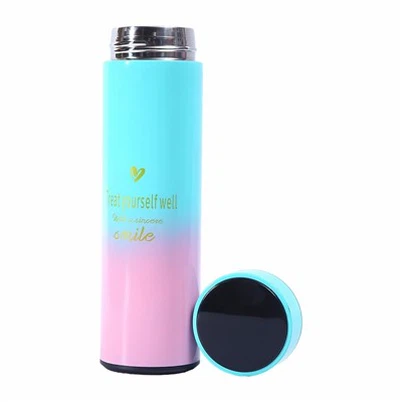
Materials Of Travel Mugs
Leave a message
Common materials for travel mugs include ceramic, stainless steel, copper lining, vacuum insulated steel bottle, Tritan material, etc. Each material has its own unique advantages and applicable scenarios.
Advantages and disadvantages of different materials
Ceramic cups: safe and tasteless, retain the original flavor of the drink, suitable for pure drinking. But it is fragile and not suitable for outdoor use.
Stainless steel cups: corrosion-resistant, not easy to breed bacteria, easy to clean, suitable for outdoor travel. 304 stainless steel and 316 stainless steel are two common materials:
304 stainless steel: has good corrosion resistance and processability, widely used in food, medical and other fields, but does not perform as well as 316 stainless steel in highly corrosive environments.
316 stainless steel: contains molybdenum, has stronger corrosion resistance and high temperature resistance, is suitable for highly corrosive environments, and has a higher price.
Copper lining: has antibacterial properties, suitable for friends who are sensitive to taste.
Vacuum insulated steel bottle: keeps warm and cold for a long time, suitable for scenes where the temperature of drinks needs to be kept for a long time.
Tritan material: Certified for European and American baby products, with high impact resistance, light and shatterproof. Suitable for outdoor activities.
Applicable scenarios of different materials
Ceramic cup: Suitable for indoor use, such as office or home.
Stainless steel cup: Especially 316 stainless steel cup, suitable for outdoor travel and highly corrosive environment.
Copper lined cup: Suitable for occasions with high hygiene requirements.
Vacuum insulated steel bottle: Suitable for occasions where the temperature of the drink needs to be kept for a long time.
Tritan material cup: Suitable for outdoor activities and children's use, because it is light, shatterproof and safe.