What is the impact of the number of jugs on the difficulty of the water jug problem?
Leave a message

The water jug problem is a classic mathematical puzzle that has intrigued thinkers for centuries. It involves using a set of jugs with specific capacities to measure a certain amount of water. As a water jug supplier, I've had the opportunity to observe how the number of jugs can significantly impact the difficulty of this problem. In this blog, I'll explore the various ways in which the quantity of jugs affects the complexity of the water jug problem and how it relates to our products.
Understanding the Water Jug Problem
Before delving into the impact of the number of jugs, let's briefly review the water jug problem. The problem typically presents two or more jugs with different capacities, and the goal is to measure a specific volume of water using only these jugs. For example, you might have a 3 - liter jug and a 5 - liter jug, and the task is to measure exactly 4 liters of water.
The solution often involves a series of filling, emptying, and pouring operations between the jugs. The difficulty of the problem lies in finding the correct sequence of these operations to achieve the desired volume.
Impact of the Number of Jugs on Difficulty
Increased Complexity with More Jugs
As the number of jugs increases, the complexity of the water jug problem grows exponentially. With more jugs, there are more possible combinations of filling, emptying, and pouring operations. Each additional jug adds a new dimension to the problem - solving process.


For instance, with two jugs, the number of possible states and operations is relatively limited. You can fill one jug, empty it, or pour from one jug to the other. However, when you introduce a third jug, the number of possible interactions between the jugs multiplies. You now have to consider filling and emptying each of the three jugs, as well as pouring between any two of them.
This increased complexity makes it more challenging to find the optimal solution. It requires a more systematic approach and a greater ability to visualize the different states and operations. As a water jug supplier, we understand that customers who are interested in using our jugs for educational or recreational purposes may face difficulties when dealing with a larger number of jugs.
More Solutions and Pathways
On the other hand, having more jugs also means there are potentially more solutions to the water jug problem. With a greater number of jugs, there are more ways to reach the desired volume. This can be both a blessing and a curse.
On one hand, it provides more opportunities for problem - solvers to find a solution. They can explore different strategies and approaches, which can be intellectually stimulating. On the other hand, it can also be overwhelming, as they have to sift through a larger number of possible operations to find the most efficient solution.
For example, if you have four jugs instead of two, there may be multiple sequences of operations that can lead to the desired volume. This can make it difficult for beginners to determine the best way to proceed.
Our Water Jugs and the Water Jug Problem
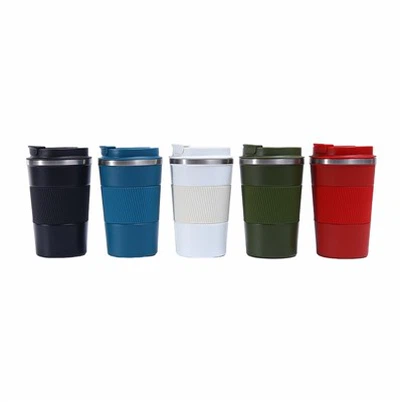
As a water jug supplier, we offer a variety of jugs with different capacities. Our Outdoor Stainless Steel Ice Jug is a popular choice among customers who are interested in the water jug problem. These jugs are made of high - quality stainless steel, which ensures durability and longevity.
Our jugs come in different sizes, allowing customers to create their own water jug problems of varying difficulty levels. Whether you're a teacher looking to introduce the water jug problem to your students or a puzzle enthusiast looking for a new challenge, our jugs can provide the perfect tools.
We understand that the number of jugs can significantly impact the difficulty of the problem. That's why we offer sets of jugs with different quantities. For beginners, we recommend starting with a set of two or three jugs. This allows them to get familiar with the basic concepts of the water jug problem without being overwhelmed by the complexity.
As they gain more experience, they can gradually increase the number of jugs to tackle more challenging problems. Our Outdoor Stainless Steel Ice Jugs are not only suitable for solving the water jug problem but also for outdoor activities such as camping and hiking. Their insulation properties keep the water cold for an extended period, making them a practical choice for various uses.
Practical Applications of the Water Jug Problem
The water jug problem is not just a theoretical puzzle; it has practical applications in various fields. In computer science, the problem is used to illustrate algorithms and problem - solving techniques. It helps students understand concepts such as state space search and heuristic algorithms.
In engineering, the water jug problem can be used to model fluid flow and resource allocation problems. By understanding how to solve the water jug problem, engineers can develop more efficient systems for managing resources.
As a water jug supplier, we are proud to provide products that can be used in these educational and practical applications. Our jugs can be used in classrooms, laboratories, and outdoor settings to teach and explore the concepts related to the water jug problem.
Encouraging Contact for Procurement
If you're interested in purchasing our water jugs for educational, recreational, or practical purposes, we'd love to hear from you. Our team is ready to assist you in choosing the right set of jugs based on your needs. Whether you're a school, a research institution, or an individual puzzle enthusiast, we can provide you with the best solutions.
Contact us to discuss your requirements and start your journey with our high - quality water jugs. We look forward to working with you to make your water jug problem - solving experience both enjoyable and rewarding.
References
- Gardner, M. (1978). Mathematical puzzles and diversions. Simon and Schuster.
- Levitin, A. (2012). Introduction to the design and analysis of algorithms. Pearson.