How to prove the correctness of a water jug problem solution?
Leave a message

In the realm of problem - solving, the water jug problem stands out as a classic conundrum that has intrigued mathematicians, puzzlers, and problem enthusiasts for ages. As a water jug supplier, I've witnessed the practical applications and theoretical significance of these jugs in various scenarios, including the solution of the water jug problem. In this blog, I'll delve into how to prove the correctness of a water jug problem solution.
Understanding the Water Jug Problem
The water jug problem typically involves a set of jugs with different capacities and the goal of achieving a specific amount of water in one or more jugs through a series of operations such as filling a jug to its full capacity, emptying a jug, or pouring water from one jug to another until either the source jug is empty or the destination jug is full.
For example, consider two jugs: one with a capacity of 3 liters and another with a capacity of 5 liters. The problem could be to obtain exactly 4 liters of water using these two jugs.
Mathematical Representation of the Problem
To prove the correctness of the solution, we first need to represent the problem mathematically. Let (x) and (y) be the amounts of water in the two jugs with capacities (a) and (b) respectively. The initial state is ((0,0)) where both jugs are empty.
The possible operations can be defined as follows:
- Filling a jug: If we fill the first jug, the new state is ((a,y)) and if we fill the second jug, the new state is ((x,b))
- Emptying a jug: Emptying the first jug gives the state ((0,y)) and emptying the second jug gives ((x,0))
- Pouring from one jug to another: Let's say we pour from the first jug to the second jug. If (x + y\leq b), the new state is ((0,x + y)). If (x + y>b), the new state is ((x + y - b,b))
Using State - Space Search
One way to prove the correctness of a solution is to use state - space search algorithms such as breadth - first search (BFS) or depth - first search (DFS). These algorithms explore all possible states that can be reached from the initial state through a sequence of operations.
In BFS, we start from the initial state ((0,0)) and explore all the states that can be reached in one step, then all the states that can be reached in two steps, and so on. Each state is represented as a node in a graph, and the operations are the edges connecting the nodes.
Let's take the 3 - liter and 5 - liter jug example again. The initial state is ((0,0)). From this state, we can fill the 3 - liter jug to get ((3,0)), fill the 5 - liter jug to get ((0,5)), or do nothing.
As we continue to explore the state space using BFS, we keep track of the states we have already visited. If we reach the target state (in our example, a state where either jug contains 4 liters of water), we can trace back the sequence of operations that led us to this state.
To prove the correctness of the solution obtained through BFS, we note that BFS explores all possible states in a level - by - level manner. This means that the first time we reach the target state, we have found the shortest sequence of operations to reach it. Since we have explored all possible states from the initial state, we can be sure that there is no other sequence of operations that can reach the target state in a shorter number of steps.
Invariant Properties
Another way to prove the correctness of a water jug problem solution is to identify invariant properties. An invariant is a property that remains true throughout the execution of the algorithm or the sequence of operations.
In the water jug problem, one important invariant is the fact that the amount of water in the two jugs at any given time can be expressed as a linear combination of the capacities of the two jugs. That is, if (x) is the amount of water in the first jug with capacity (a) and (y) is the amount of water in the second jug with capacity (b), then (x+ y = ma+nb) for some non - negative integers (m) and (n).
This invariant property can be used to prove that certain target states are unreachable. For example, if the greatest common divisor (GCD) of the capacities of the two jugs does not divide the target amount of water, then it is impossible to obtain the target amount of water using the given jugs.
Let (d=\text{GCD}(a,b)). The amount of water (z) that can be obtained in any combination of the two jugs must satisfy (z = kd) for some integer (k). If the target amount (t) is such that (t\bmod d\neq0), then there is no sequence of filling, emptying, and pouring operations that can result in (t) liters of water in one of the jugs.
Practical Applications and Our Water Jugs
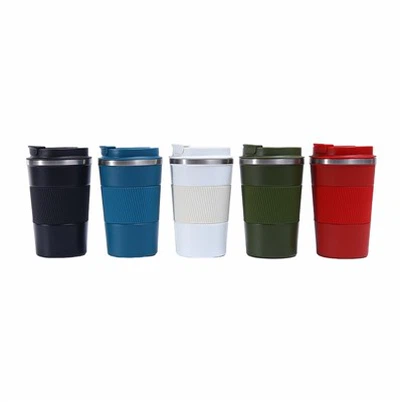
As a water jug supplier, we offer a wide range of water jugs, including the Outdoor Stainless Steel Ice Jug. These jugs are not only useful for everyday hydration needs but can also be used in educational settings to demonstrate the water jug problem.


In a classroom, students can use our jugs to physically perform the operations of filling, emptying, and pouring water, which helps them understand the problem better. Our high - quality stainless - steel jugs are durable and have accurate capacity markings, making them ideal for such experiments.
Proving the Correctness in Practice
When a customer presents a water jug problem solution using our jugs, we can prove its correctness in a practical way. First, we can verify that the operations performed are valid according to the rules of the problem. For example, if the solution claims to pour water from one jug to another, we can ensure that the pouring is done in a way that either the source jug is emptied or the destination jug is filled.
We can also measure the amount of water in the jugs after each step to confirm that the amounts match the expected values based on the solution. If the final state of the jugs matches the target state of the problem, and all the operations were performed correctly, then we can conclude that the solution is correct.
Conclusion and Call to Action
Proving the correctness of a water jug problem solution can be done through mathematical analysis, state - space search, and identification of invariant properties. As a water jug supplier, we are committed to providing high - quality jugs that can be used in educational and practical problem - solving scenarios.
If you are interested in purchasing our water jugs for educational purposes, outdoor activities, or any other use, we invite you to contact us for procurement discussions. Our team of experts can provide you with detailed information about our products and help you choose the right jugs for your needs.
References
- Dasgupta, S., Papadimitriou, C. H., & Vazirani, U. V. (2006). Algorithms. McGraw - Hill.
- Cormen, T. H., Leiserson, C. E., Rivest, R. L., & Stein, C. (2009). Introduction to Algorithms. MIT Press.