How does the water jug problem relate to mathematics?
Leave a message

The water jug problem is a classic puzzle that has intrigued mathematicians, puzzle enthusiasts, and problem - solvers for centuries. As a water jug supplier, I've always been fascinated by how this simple yet complex problem intersects with the world of mathematics and, of course, our real - world products.


The Water Jug Problem: A Brief Overview
The water jug problem typically involves two or more jugs of different capacities and the goal of measuring a specific amount of water using these jugs. For example, you might have a 3 - liter jug and a 5 - liter jug, and you need to measure exactly 4 liters of water. The rules usually state that you can fill a jug to its maximum capacity, empty a jug completely, or pour water from one jug to another until either the receiving jug is full or the pouring jug is empty.
This problem may seem like a mere brain - teaser at first glance, but it has deep roots in mathematics. It can be modeled and solved using concepts from number theory, linear algebra, and graph theory.
Number Theory and the Water Jug Problem
Number theory is the branch of mathematics that deals with the properties and relationships of numbers, especially integers. In the context of the water jug problem, the greatest common divisor (GCD) plays a crucial role.
Let's consider the general case where we have two jugs with capacities (a) and (b) liters, and we want to measure a quantity (c) liters of water. A necessary condition for the problem to have a solution is that (c) is a multiple of the GCD of (a) and (b), i.e., (c = k\times\gcd(a,b)) for some non - negative integer (k).
For instance, if we have a 4 - liter jug and a 6 - liter jug, (\gcd(4,6)=2). We can measure any multiple of 2 liters (2, 4, 6, etc.) using these two jugs. However, we cannot measure 3 liters because 3 is not a multiple of 2.
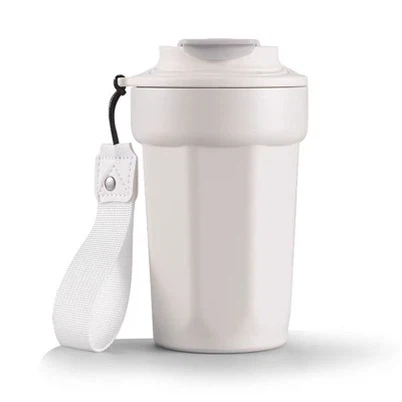
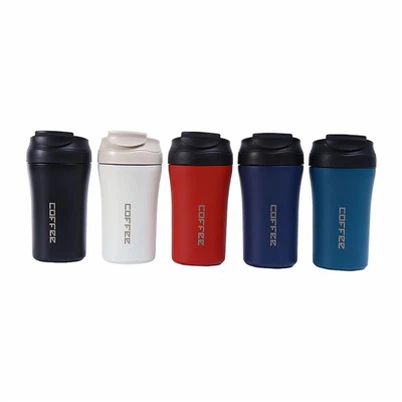
As a water jug supplier, understanding these number - theoretic concepts helps us in product development. We can design jugs with capacities that allow for a wider range of possible measurements. For example, if we offer jugs with capacities that are relatively prime (i.e., (\gcd(a,b) = 1)), customers can theoretically measure any integer amount of water between 1 and the sum of the two capacities, given enough time and patience. Check out our Outdoor Stainless Steel Ice Jug which comes in various capacities, allowing for creative water - measuring experiments.
Linear Algebra and the Water Jug Problem
Linear algebra provides another powerful tool for solving the water jug problem. We can represent the states of the jugs as vectors in a two - dimensional space.
Let (x) be the amount of water in the first jug and (y) be the amount of water in the second jug. The initial state is ((0,0)), and the goal state is ((0,c)) or ((c,0)) (depending on which jug will hold the desired amount of water).
The operations of filling, emptying, and pouring can be represented as linear transformations. Filling a jug corresponds to adding a vector representing the capacity of the jug to the current state vector. Emptying a jug corresponds to subtracting the current state vector of that jug. Pouring water from one jug to another is a combination of addition and subtraction operations.
For example, if we have a 3 - liter jug ((x)) and a 5 - liter jug ((y)), the initial state vector is (\vec{v}=(0,0)). Filling the 5 - liter jug gives us the vector ((0,5)). Pouring water from the 5 - liter jug to the 3 - liter jug until the 3 - liter jug is full results in the vector ((3,2)).
By using matrix operations and linear combinations, we can find a sequence of operations that will lead us from the initial state to the goal state. This approach not only provides a systematic way to solve the problem but also shows the underlying mathematical structure of the water - jug operations.
Graph Theory and the Water Jug Problem
Graph theory offers a visual and intuitive way to represent and solve the water jug problem. We can create a graph where each vertex represents a possible state of the jugs, and each edge represents an operation (filling, emptying, or pouring).
The initial state is the starting vertex of the graph, and the goal state is the target vertex. The problem then reduces to finding a path from the starting vertex to the target vertex in the graph.
For example, with a 2 - liter jug and a 4 - liter jug, the states of the jugs can be represented as pairs ((x,y)) where (0\leq x\leq2) and (0\leq y\leq4). The total number of possible states is ((2 + 1)\times(4+ 1)=15). Each state is a vertex in the graph, and there are edges connecting states that can be reached from one another through a single operation.
We can use algorithms such as breadth - first search (BFS) or depth - first search (DFS) to find the shortest path from the initial state to the goal state. This graph - theoretic approach is not only useful for solving the problem but also for analyzing the complexity of different jug - capacity combinations.
Real - World Applications and Our Role as a Supplier
The water jug problem may seem like an abstract mathematical concept, but it has several real - world applications. In industries such as chemical engineering, where precise measurements of liquids are required, the principles behind the water jug problem can be used to optimize the use of containers of different sizes.
As a water jug supplier, we understand the importance of providing products that can meet the diverse needs of our customers. Our jugs are designed with high - quality materials and accurate capacity markings, ensuring that customers can perform their own "water - measuring experiments" with ease. Whether it's for scientific research, educational purposes, or simply for fun, our water jugs are up to the task.
Conclusion and Call to Action
The water jug problem is a fascinating example of how mathematics can be applied to a seemingly simple puzzle. By understanding the concepts of number theory, linear algebra, and graph theory, we can not only solve the problem but also gain insights into the underlying mathematical structures.
If you're interested in exploring the world of water jugs and the mathematical challenges they present, we invite you to browse our product range, including the Outdoor Stainless Steel Ice Jug. Whether you're a teacher looking for educational tools, a scientist in need of precise measuring containers, or just someone who loves a good puzzle, we have the right water jug for you.
We're always open to discussing your specific requirements and how our products can meet them. If you're interested in purchasing our water jugs in bulk or have any questions about our product range, please don't hesitate to contact us for a procurement discussion. We look forward to working with you to find the perfect water jug solutions for your needs.
References
- Knuth, D. E. (1997). The Art of Computer Programming, Volume 1: Fundamental Algorithms. Addison - Wesley.
- Diestel, R. (2017). Graph Theory. Springer.
- Niven, I., Zuckerman, H. S., & Montgomery, H. L. (1991). An Introduction to the Theory of Numbers. Wiley.