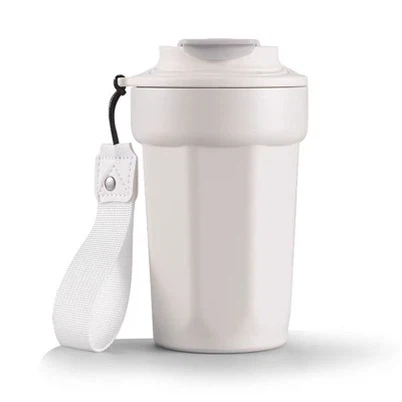
How does the insulation of an octagonal coffee thermos cup change over time?
Leave a message

As a supplier of Octagonal Coffee Thermos Cups, I've witnessed firsthand the growing demand for high - quality, long - lasting insulated drinkware. In this blog, we'll explore how the insulation of an octagonal coffee thermos cup changes over time, delving into the science behind it and its implications for consumers.
The Initial Insulation Performance
When a brand - new octagonal coffee thermos cup leaves the factory, it offers peak insulation performance. Our Octagonal Coffee Thermos Cup is designed with a double - walled structure, usually made of high - grade stainless steel. The space between the two walls is vacuum - sealed, which significantly reduces heat transfer through conduction and convection.
Conduction is the transfer of heat through a material. In a well - insulated thermos, the vacuum layer acts as an excellent insulator because there are very few molecules to transfer heat. Convection, on the other hand, involves the movement of heat through a fluid (such as air). The vacuum eliminates the air in the space between the walls, preventing convection currents from forming.
Radiation is another form of heat transfer. To minimize radiative heat transfer, the inner walls of our thermos cups are often coated with a reflective material. This reflective coating reflects the infrared radiation emitted by the hot liquid inside the cup back into the liquid, keeping it hot for longer.
Factors Affecting Insulation Over Time
1. Wear and Tear
With regular use, the octagonal coffee thermos cup is subject to wear and tear. Dropping the cup or hitting it against hard surfaces can cause dents or cracks in the outer or inner wall. Even a small crack can break the vacuum seal, allowing air to enter the space between the walls. Once air is present, heat transfer through conduction and convection becomes more significant, reducing the insulation efficiency.
2. Cleaning and Maintenance
The way we clean our thermos cups also affects their insulation. Using abrasive cleaners or scrubbing too hard can damage the inner coating. This coating not only helps with radiation reflection but also protects the inner wall from corrosion. If the coating is damaged, the cup may start to lose its insulation properties more quickly.
3. Material Degradation
Over time, the materials used in the thermos cup may degrade. For example, the rubber gaskets in the lid can dry out and crack. These gaskets are crucial for maintaining a tight seal, preventing heat from escaping through the top of the cup. As they deteriorate, heat loss increases.
Measuring the Change in Insulation
To understand how the insulation of an octagonal coffee thermos cup changes over time, we can conduct a simple experiment. First, fill a new thermos cup with hot water at a known temperature, say 90°C. Measure the temperature of the water after a certain period, for example, 1, 2, 4, and 8 hours. Record these temperatures.
After using the thermos cup regularly for a few months, repeat the experiment with the same initial water temperature. You'll likely notice that the water cools down faster in the used cup compared to the new one. This difference in cooling rate indicates the change in insulation performance.
Long - Term Insulation Performance
In the long run, if the thermos cup is well - cared for, it can maintain a relatively good level of insulation for several years. However, it's important to note that no thermos cup will keep the liquid hot indefinitely. Eventually, the insulation will gradually decline due to the factors mentioned above.
Comparing with Other Types of Coffee Tumblers
Let's compare our Octagonal Coffee Thermos Cup with other types of coffee tumblers on the market, such as the Coffee Tumbler with Lid and Straw and the Stainless Steel Coffee Tumbler with Straw.
The octagonal shape of our thermos cup not only provides a unique aesthetic but also offers some practical advantages. The flat sides of the octagon can make it more stable on surfaces compared to round tumblers. In terms of insulation, our double - walled, vacuum - sealed design generally outperforms single - walled tumblers.
However, different tumblers may have different insulation capabilities based on their construction and materials. For example, some tumblers may use different types of insulation materials or have different wall thicknesses.
Implications for Consumers
For consumers, understanding how the insulation of an octagonal coffee thermos cup changes over time is crucial. It helps them make informed decisions when purchasing a thermos cup and also guides them on how to care for it to extend its lifespan.
If you're a coffee lover who wants to enjoy a hot cup of coffee throughout the day, a high - quality octagonal coffee thermos cup is a great investment. But remember to take good care of it to ensure it maintains its insulation performance for as long as possible.
Contact for Purchase and Negotiation
If you're interested in our Octagonal Coffee Thermos Cups or other coffee tumblers, we'd love to have a discussion with you. Whether you're a retailer looking to stock our products or an individual interested in bulk purchases, we're here to assist you. Feel free to reach out to us for more information and to start the procurement negotiation process.
References
- Incropera, F. P., & DeWitt, D. P. (2002). Fundamentals of Heat and Mass Transfer. Wiley.
- ASHRAE Handbook of Fundamentals. American Society of Heating, Refrigerating and Air - Conditioning Engineers.